
Every German Kid Knows Winnetou
How a 19th-century German novelist made me write a love story between two mythologies
Book 1, Spirit Hunger, is still available for free.
If you grew up in Germany any time between 1960 and 1990, you know who Winnetou is. You don’t have to think about it. You just know. He’s the Apache chief from Karl May’s novels, and he’s as embedded in German childhood as the Brothers Grimm.
Here’s what makes that strange: Karl May wrote over sixty novels about the American frontier from his desk in Saxony. He didn’t visit the United States until he was already famous. The man invented an entire mythology of the West from a study in Radebeul, and an entire country believed him. My parents’ generation grew up watching the Winnetou films every Christmas. There were (and still are) outdoor theater festivals in Bad Segeberg dedicated to performing his stories. Germans dressed up in feathered headdresses at Indianistik clubs and nobody blinked.
It’s weird. It’s also complicated, because there’s genuine affection tangled up in the appropriation, and unpicking which is which takes more than a Substack post. But the fascination itself, the question of WHY Germans latched onto this particular mythology so hard, is something I’ve been sitting with for years.
Because here’s what I found when I stopped looking at Karl May and started looking at the folk tales underneath: German and Native American oral traditions share bones.
Trickster figures. Shapeshifters who blur the line between human and animal. Forests as thresholds between the known world and something older. The idea that certain people can see what others can’t, and that this seeing comes with a cost. In Grimm’s tales, the youngest son wanders into the dark wood and comes back changed. In oral traditions across Indigenous North America, the vision quest serves a parallel function. The structure rhymes. The details are completely different, but the architecture of the stories keeps echoing.
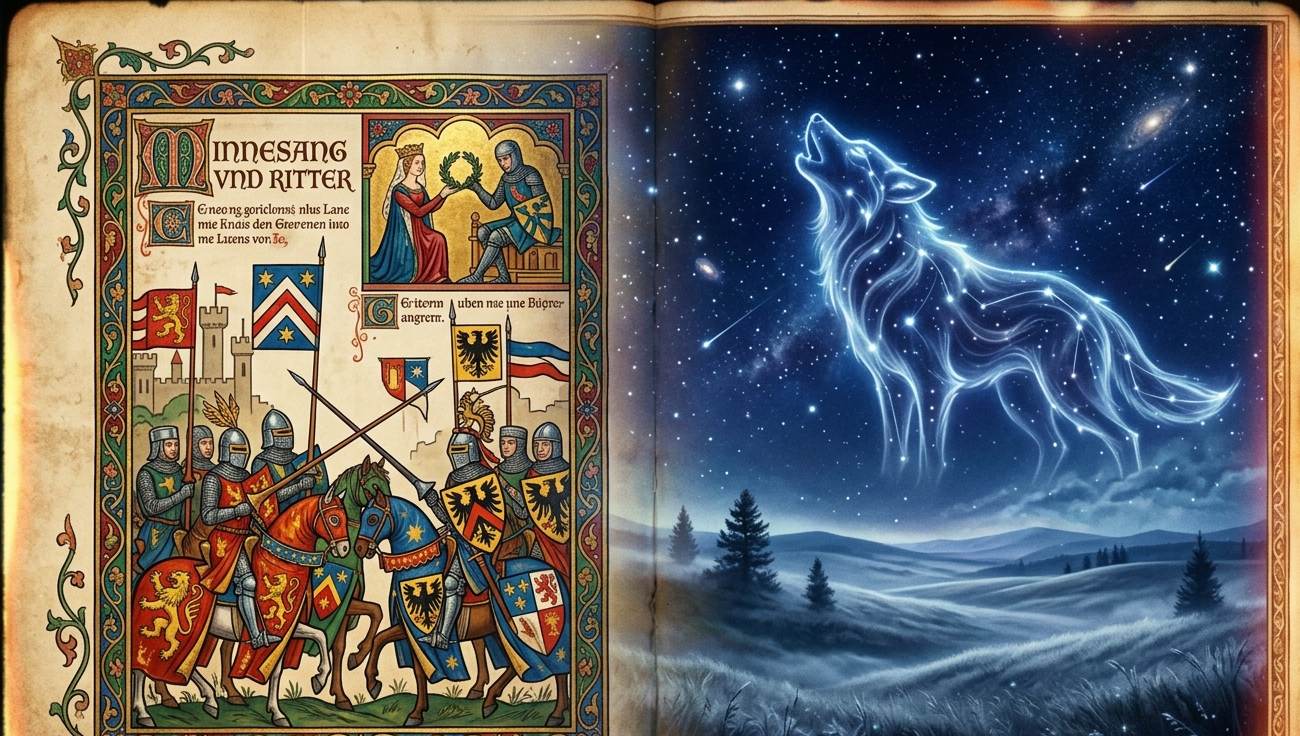
That echo is where the Spirit Walker series started.
I didn’t set out to write a thesis on comparative mythology. I set out to write a love story. But Adi is German-American, and Honi is Mekui’te, and their romance kept pulling me into the space where these two traditions overlap. The way both cultures tell stories about animals that carry meaning. The way both have figures who walk between worlds. The way the forest (or the plains, or the dream) is always the place where the rules change.
The Mekui’te are fictional. I want to be clear about that. I didn’t base them on a specific nation because I didn’t want to borrow someone else’s sacred traditions and get them wrong, or worse, get them right in a way that felt like taking. The Mekui’te are built from the archetypal patterns that repeat across traditions, the ones that feel universal because they keep showing up independently in cultures that never met each other.
(Whether that’s because humans share cognitive architecture or because there really is something in the forest watching us back, I’m happy to leave that one open.)
Setting Book 2 in Heidelberg let me lean all the way into the German side. The Krabat legend, the Codex Manesse, old Heidelberg with its castle ruins and the Heidenloch tunnel. I spent a ridiculous amount of time researching Sorbian folklore for that book, and most of it didn’t make it onto the page, but it’s holding the story up from underneath.
My tea is going cold (strong Irish black, no milk, no sugar, the only correct way) and I have proofing to get back to. But I’ll come back to this. There’s a specific overlap between German forest mythology and the spirit animal tradition that I’ve been dying to write about properly, and it connects to something in Book 3 that I think will surprise people.
Until then.
xo Ella
Book 1, Spirit Hunger, is still available for free.
Originally published on Writing Through the Veil