
The Dead Boy in the Hills Is Why I Built Rules
How a fictional corpse taught me that magic systems need consequences
I didn’t start with a magic system. I started with a girl who could see things no one else could, and a world that had been medicating her for it since she was six.
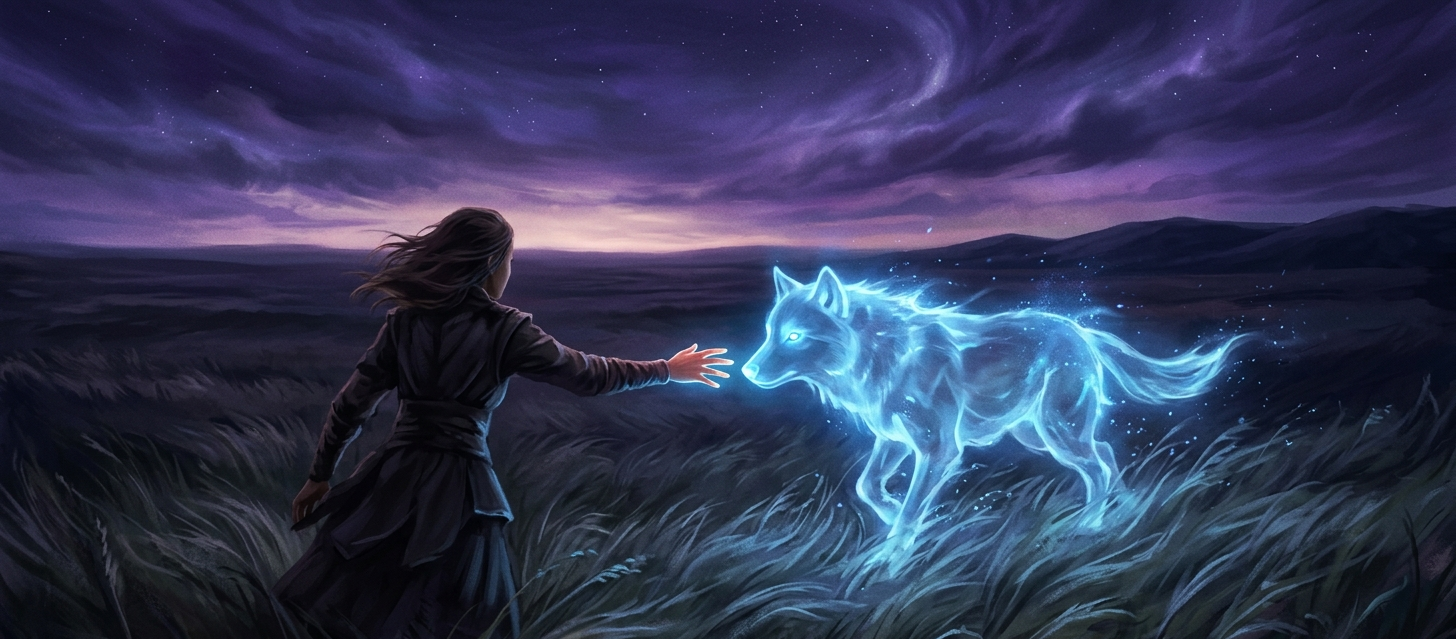
Adi Gutseel spent her childhood being told she was sick. The creatures she saw following people around, perched on their shoulders, tangled in their hair? Hallucinations. Psychotic episodes. Her doctors had a diagnosis and a prescription and a firm suggestion that she stop talking about it.
She stopped talking about it. The creatures went away. And then, years later, they came back. That was the seed of Spirit Hunger. I knew the creatures were real. I knew Adi wasn’t sick. But I also knew I couldn’t just say “surprise, it’s magic” and move on, because the interesting part was never whether the visions were real. It was what it costs to be the person who sees them.
The spirit animal system grew out of one question I kept asking myself: what would actually happen, and what would it mean to the protagonists in their day-to-day lives?
If every living person has a spirit animal that reflects their soul, and almost nobody can see them, what happens to the animals? They’re starving for attention from the rare people who can perceive them. Generations of dwindling seers means generations of neglect. And neglected things get angry.
That gave me the Weatherford boy. A young man in Custer County who started having terrible dreams, who told his friends something was stalking him in his sleep. Nobody believed him. They found his body in the hills, covered in wounds from animals that shouldn’t have been anywhere near each other. Birds, coyotes, snakes. The coroner wrote “death from exposure” because there was no better explanation.
I wrote that scene in a single sitting and then sat with my tea going cold, thinking about what I’d just built. Because if the spirit world can kill someone through their dreams, and if dream injuries carry over to the waking body (Adi wakes up covered in real bite marks in chapter 20), then this isn’t a soft magic system anymore. It has literal teeth.
The rules built themselves from there. Honi, who grew up in the Mekui’te tradition, can toggle his sight on and off through meditation. He trained for it and learned control. Adi has no training, no tradition, no mentor, and her ability is GETTING STRONGER whether she wants it to or not. She’s a volume knob stuck on max, and nobody taught her where the off switch is.
I spent a lot of time with the symbiosis angle. Spirit animals aren’t parasites or servants. They feed from the living, and the living feed from them. It’s an exchange that used to work, back when enough people could see. Now the connection has withered, and the spirit world is furious about it. The younger Mekui’te kids on the reservation are having nightmares. Honi, who’s had perfect control since he was fourteen, suddenly can’t turn off his sight when Adi walks into a room.
She’s basically destabilizing the system.
The part that surprised me most was what the rules did to Adi’s relationship with Honi. If his presence suppresses the nightmares, and the nightmares can physically injure her, then sharing his bed becomes a survival decision. And Adi, who spent her whole life being told she was broken, now has to accept that needing someone keeps her alive. I didn’t plan for the magic system to become a metaphor for trust. It just worked out that way, because I’d built the rules tight enough that the story had nowhere else to go.
Every rule I built came from the same question: what would actually happen? The magic system turned into a story about trust and survival because I kept answering that question.
— Ella
P.S. Spirit Hunger, book 1, is still available as a free download. Book 2, Spirit Elfen, is being edited as I write this post, so should be available very soon! Watch this space
Originally published on Writing Through the Veil