
I Will Die on the Third-Act Breakup Hill
A working defense of romance’s most controversial beat, from someone who writes the thing.
I will die on the third-act breakup hill. I will die on it wearing my writing pajamas, holding a lukewarm cup of tea, and muttering “but it EARNED it” at whoever tries to drag me off.
Let me back up. If you read romance, you know the beat. Around the 78% mark of a rom-com, the couple that has been flirting, scheming, accidentally touching hands, and slowly falling in love since chapter two, will blow up their relationship. One of them will walk out. One of them will say the thing they can’t take back.
The reader will text a friend in all caps. Someone will throw the book across a room (gently, it’s a library copy). And for the next forty pages, the internet will argue about whether that beat is romance’s most necessary gut-punch or its laziest manufactured obstacle.
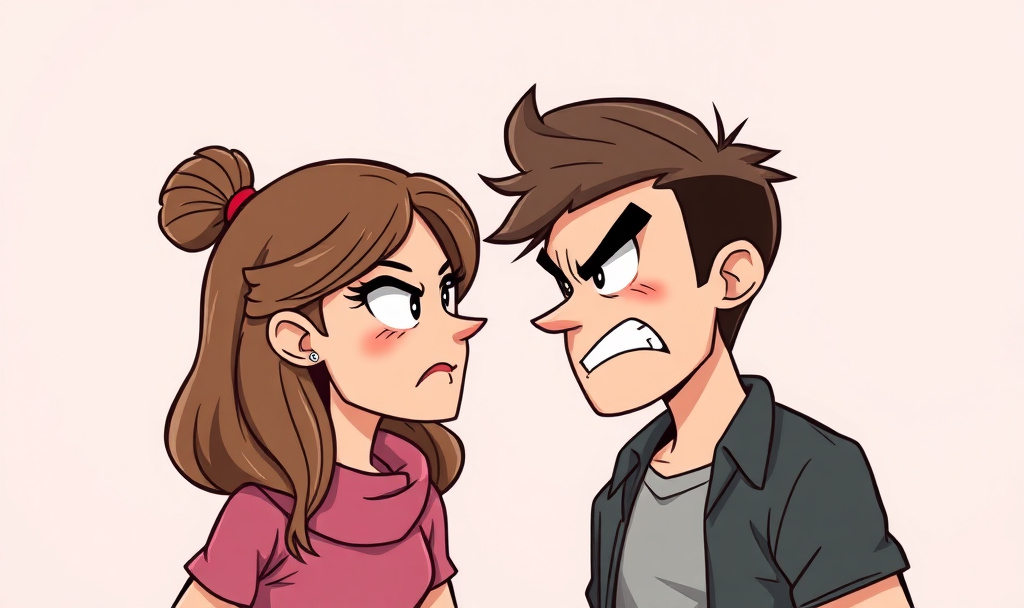
Why do some writers and readers hate the 3rd act breakup?
Here’s my position, as someone who writes the thing: we’ve given the whole beat a bad name because of one specific lazy version that shows up in about forty percent of books. You know the one I mean. I’ll describe it.
The heroine overhears half a conversation. She decides, instantly, with the certainty of a woman who has never once in her life asked a clarifying question, that she’s been betrayed. Her love interest tries to explain.
She won’t let him. She leaves. The reader screams BECKY, HE’S TALKING TO HIS SISTER. Forty pages of misery ensue, powered entirely by a misunderstanding that nine words and one text message could have fixed.
Reader, I’m sorry, but that is a plot hole in a trench coat pretending to be a third-act breakup.
A real third-act breakup, the kind I will defend until I lose my voice at a dinner party, is about the wound.
You know the wound. Every romance has one. She doesn’t think she’s lovable because her dad left when she was six. He doesn’t let anyone close because the last person he loved died. It’s the reason both of them have spent the last two hundred pages almost, but not quite, letting each other in.
The third-act breakup is the moment the book leans its full body weight onto that wound
And both characters have to fail. Not just one of them. Both. If only the heroine runs and the hero does everything right, the scene lands like a bad day instead of a structural gut-punch. The beat only works when both of them mess it up in exactly the way their arc warned you they would, and then go home and have to look at the person they actually are instead of the person they were pretending to be.
That part is the medicine. Everything before it was the falling-in-love. The breakup is the become-someone-who-deserves-it. You cannot skip it. I’ve read books that try, and every time the happy ending lands like a dead fish.
How do I make sure the breakup works?
Does this mean I forgive every book that pulls the trigger at 78%? Absolutely not. I have a working test. I use it while drafting my own books and while reading everyone else’s. Three questions.
One. Could a text message have fixed it? If yes, lazy.
Two. Would the character have walked out of that room in exactly this way back in chapter three, when the wound was still fresh and none of the arc had happened yet? If yes, also lazy. The whole book was supposed to change them.
Three. When the apology finally comes, does it require one of them to become a person they couldn’t have been in chapter one? If yes, congratulations, you’ve written the real thing. Readers will forgive you for breaking their hearts. Some of them will thank you. (I have the emails to prove it, written in capital letter, and almost always at 1 a.m.)
So the next time you see someone on Threads declare that the third-act breakup is lazy writing, tell them, lovingly, in your pajamas, that the lazy ones are lazy writing. The good ones are the reason you’re still reading past page 78% in the first place.
I’ll die on that hill. But at least I’ll be comfortable.
— Isabel
P.S. Want release alerts, Driftwood Harbor behind-the-scenes, and early warning for when I inevitably write a third-act breakup of my own? Sign up to this substack until I get my newsletter going. That way, you won’t miss my debut novel coming SOOOOON!!
Originally published on Banter & Butterflies